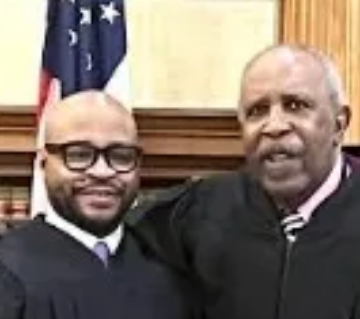
CT Courts Packed With “Diverse” Group of “Politically Connected” Prosecutors
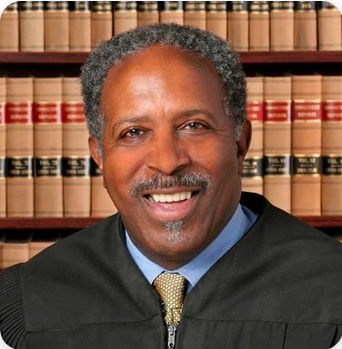
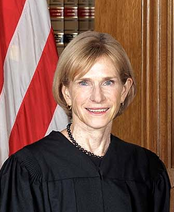
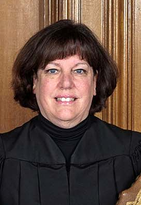
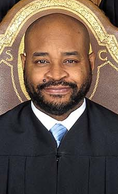
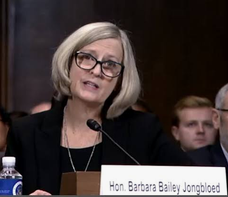
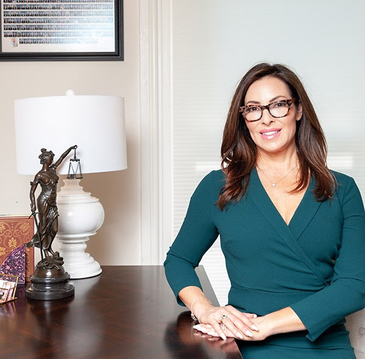
Attorney John Mills, an older white male litigator from New Haven with an impeccable 30 year reputation trying over 100 cases to verdict, got in trouble with the CT disciplinary authorities over his sharp criticism of a handful of CT Judicial decisions. The Judicial authorities wanted him to agree to a suspension of his law license, and then dropped it to a mere reprimand. Mills decided to hire attorney ethics expert Suzanne Sutton, of Cohen & Wolf, who used to work for the disciplinary authorities. Sutton didn’t get anywhere and filed an appeal where a majority of the CT Supreme Court, consisting of mostly Black and female former prosecutors, upheld the reprimand of Mills. The two old white male Justices who dissented and voted in favor of old man Mills, and by extension the First Amendment, were Justices Steven Ecker and Gregory D’Auria who wrote the following: “… the judicial decisions criticized by the plaintiff… comes nowhere close to establishing… that the plaintiff’s criticisms were false… the majority proceeds to build a case against the plaintiff that disciplinary counsel did not build… the majority engages in precisely the kind of post hoc rationalization of the underlying committee decision that it acknowledges is impermissible under administrative law principles… Unduly burdening the speech of attorneys, who are ‘the very class of people in daily contact with the judicial system’ and ‘most calculated to be intimately familiar with this aspect of the government process,’ not only infringes on attorneys’ first amendment rights to criticize the government, but also on ‘the public’s First Amendment right to hear what the attorney has to say … clearly striking at the center of the concerns of the First Amendment.” Mills v. Statewide Grievance Committee 354 Conn. 291 (2026). Suzanne also represented suspended attorney and former Bridgeport Mayor Joe Ganim, who also tried to get his license back. Permission to practice law DENIED for Mr. Ganim. Sutton is 0 for 2.
The Mills holding may have a chilling effect on the speech of small solo practitioners such as Mr. Mills. Why did they beat up on an attorney with 30 years of a spotless record, for criticizing Superior Court decisions in a legal document filed with court? The split decision reveals divergent views as to what an attorney can say in a pleading or during a hearing. Yet when a State’s attorney uses language during a criminal trial that the Supreme Court determines was improper, the Judicial authorities almost never file a grievance against a prosecutor. For example in State v. Dabate, 351 Conn. 428 (2025) the Supreme Court stated: “we conclude that the prosecutor’s reference to a ‘mini Cheshire’ was in direct violation of the trial court’s ruling and, therefore, was improper…The inflammatory aspect of these comments was compounded by the fact that the prosecutor made them during rebuttal summation, which meant that the defense could not respond…We acknowledge that the prosecutor’s conduct did not meet the standard of professionalism expected of prosecutors in the state and that he was admonished multiple times by the trial court. This is particularly notable because he is an experienced litigator who has successfully prosecuted numerous cases and is the state’s attorney for the judicial district of Tolland…” This prosecutor, ie., Matthew Gedansky, was never subjected to costly protracted disciplinary litigation as John Mills was subjected to. What is most shocking about the Dabate case is that the Supreme Court ruled that the State had overwhelming evidence of the Defendant’s guilt, resulting in the guilty verdict not being overturned on appeal. Yet the prosecutor felt it necessary to engage in improper conduct. Two months after the Dabate decision was released by the Supreme Court it was announced by the Criminal Justice Division, which is chaired by Justice Andrew McDonald of the CT Supreme Court, that Gedansky was stepping down from his position as chief prosecutor for Tolland County, yet still keeping a position in the State’s Attorneys office as “executive assistant.” Yet the State’s Attorneys Offices didn’t mention anything about Gedansky’s role in the Dabate case. Gedansky was praised by the Chief State’s Attorney for his service and commitment to the State of Connecticut. Nobody in the media, including Dwight Bachman, mentioned that Gedansky stepped down obviously because of his egregious misconduct in Dabate.
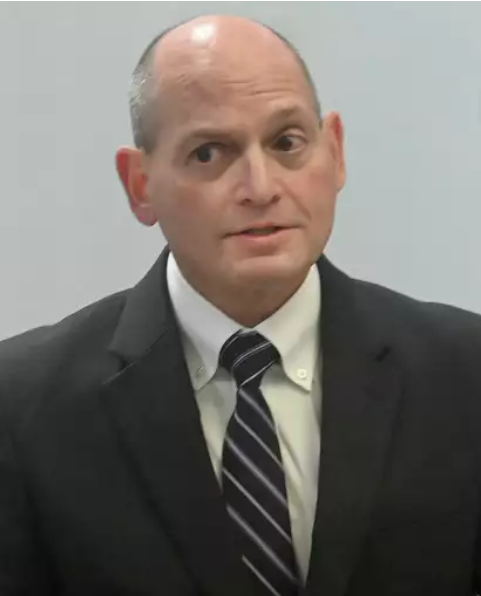
In State v. Sullivan, 351 Conn. 798 (2025) the Supreme Court stated the following about the prosecutor: “By using the phrase ‘nuts and sluts,’ the prosecutor used patently inflammatory language. Instead of using innocuous terms to describe these defenses… the prosecutor instead chose to use a crass phrase that the jurors would likely find offensive and would cause them to reflexively side with the person baselessly accused of being insane or promiscuous. Its inflammatory nature was compounded by the fact that the prosecutor used the phrase during her rebuttal closing argument. As a result, defense counsel had no opportunity to respond.” In the case of State v. Parris, 352 Conn. 652 (2025) the Supreme Court said the following of the prosecutor: “we conclude that the prosecutors committed impropriety when they repeatedly misstated the law… the defendant has established that the prosecutorial impropriety deprived him of a fair trial in violation of his due process rights”. In State v. Therrien, 117 Conn.App. 256 (2009) the Appellate Court concluded the following about State’s Attorney Gail Hardy: “The prosecutorial improprieties… occurred with significant frequency and were severe. Finally, they went to the heart of the case and gave the jury a reason to disregard the defendant’s strong alibi evidence..”
Attorney John Mills never used words in a courtroom that were so egregious as to cause the reversal of a murder conviction, as was the case in State v. Parris. The prosecutor in Parris was John Doyle of New Haven, a veteran prosecutor with decades of trial experience and high standing in the CT Bar. Yet to my knowledge I don’t believe any grievances were filed against Mr. Doyle. The majority in Parris voted that the conviction should be reversed and ordered a new trial. Mullins and Alexander both voted that the conviction should stand and the defendant should spend the rest of his life in jail. Said Justices are former Connecticut prosecutors, which raises another issue, the fact that the Connecticut trial, Appellate and Supreme Courts have a very high percentage, relative to other States, of former State prosecutors, former attorneys who worked at State agencies such as the Attorney General’s Office, and former corporate lawyers who worked for firms that catered to large institutions and governmental entities. Although Connecticut does not have elections for Justices, as is the case in some states, politics at times can influence the makeup of the Judiciary, as it does on the Federal level, where the public clamors for “law and order” or even “anti-abortion” nominees to the Bench. By contrast, in England, Judges are chosen by an open, merit-based selection process managed by the independent judicial commission in which candidates are considered using a name-blind approach and a standardized skills framework testing legal ability, character, and integrity. A CT judicial nominee recently had to withdraw his application based on political concerns. Have the prosecutors slowly taken over the CT Judiciary? Will CT soon become a police State?

Mr. Doyle’s misconduct was described as “impropriety” in Parris even though it resulted in overturning a murder conviction. No such courtesies are extended to small practitioners or criminal defense attorneys, who are regularly marred with lengthy detailed “misconduct” reports on their Judicial website page even in cases that resulted in no disciplinary action other than having to take CLE classes. Said reports are invariably used against the attorney in future disciplinary complaints, while prosecutors practice with near impunity. Small practitioners for the most part represent a majority of the public in high conflict areas of family law and criminal law, areas where clients file complaints, habeas petitions and grievances against attorneys on a regular basis. Are small practitioners deterred from zealously advocating for their clients out of fear of selective, overly punitive enforcement by the disciplinary authorities? Are the disciplinary authorities infringing upon the public’s Sixth Amendment constitutional right to hire an attorney of their own choice?
Attorney Yona Gregory is being sued for harassment, vexatious litigation and a variety of other claims after Yona’s defamation lawsuit against Lori Hopkins-Cavanagh was dismissed on First Amendment grounds. Yona was appointed to a legal ethics panel to review reinstatement applications by former prosecutor and current Supreme Court Justice Joan Alexander. When is Joan Alexander going to investigate whether Yona Gregory should be subjected to an ethical complaint for filing a questionable lawsuit, in my opinion, that got dismissed on First Amendment grounds?
These mental midgets in the Connecticut Bar need to be exposed, impeached and removed from office NOW. Please send me your tips.
DEMOCRACY DIES IN THE DARKNESS!!
2 thoughts on “CT Courts Packed With “Diverse” Group of “Politically Connected” Prosecutors”
bsd
“nuts & sluts”.
isn’t that the name of the bus that drops UNH students off downtown?
Moshiach NOW!
Oy vey. THE GREAT NOTICING CONTINUES.